
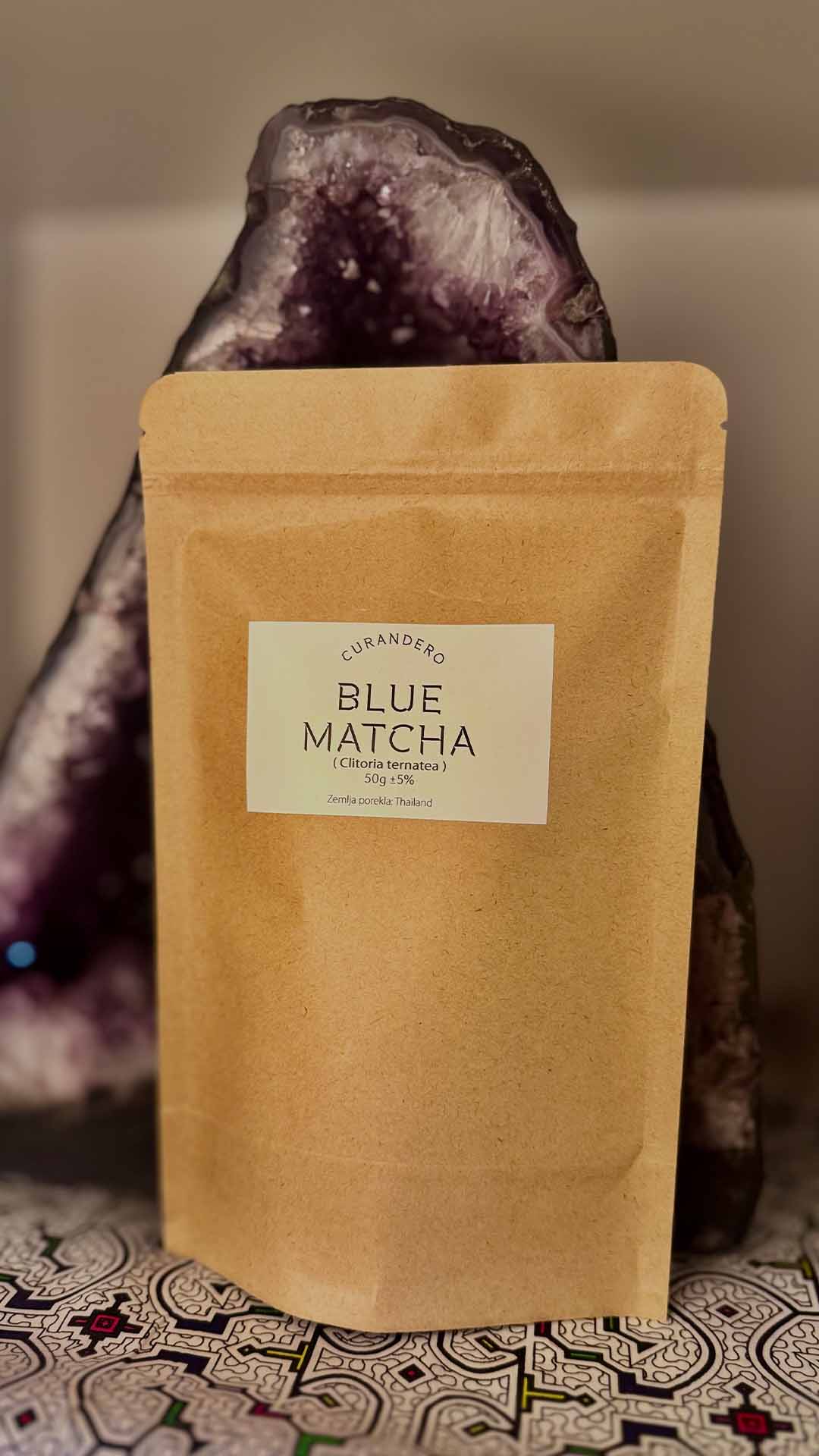
Blue Matcha (Clitoria ternatea – Butterfly Pea)
Latin name: Clitoria ternatea
Also know as: Asian pigeonwings, bluebellvine, blue pea, butterfly pea, cordofan pea, Darwin pea, Blue tea
Origin: Thailand
Origin & Source
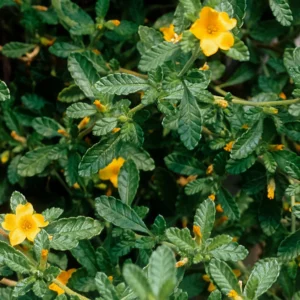
Blue Matcha is a powder made from dried and finely ground petals of Clitoria ternatea, a climbing plant native to Southeast Asia. The flowers are harvested, dried, and milled into a vivid blue powder.
Color & pH Sensitivity
The striking natural blue color is due to plant pigments (anthocyanins). When you add an acidic ingredient like lemon juice, the color can shift from blue to purple or pink because the pigments change with pH.
Taste Profile
Taste is generally mild, earthy, slightly floral or herbal—much gentler and less bitter than green matcha. Some describe it as subtle and almost neutral, sometimes with hints reminiscent of edamame or grass.
Caffeine Content
Unlike green matcha, Blue Matcha is naturally caffeine‑free, so it won’t stimulate your nervous system like tea or coffee. This makes it suitable as a calming drink at any time of day.
Antioxidants & Bioactive Compounds
Blue Matcha is rich in anthocyanins, a class of antioxidants that help neutralize free radicals (unstable molecules that can damage cells). These antioxidants play a role in anti‑inflammatory and protective effects and give the drink its blue color.
Perceived Health Effects
In herbal and traditional contexts, Blue Matcha is associated with:
-
Relaxing, calming effects and support for stress relief without drowsiness.
-
Cognitive support and memory focus (traditional uses suggest benefits for brain health).
-
Potential anti‑inflammatory and antioxidant support, which may contribute to general wellness.
-
Support for digestion and mild soothing of the gut (mentioned in some traditional uses).
Scientific research behind many of these effects is still developing, so while antioxidants are real, claims around major therapeutic benefits should be viewed as emerging rather than proven.
Uses & Preparations
You can whisk Blue Matcha like tea or mix it into:
-
Lattes and milk drinks (dairy or plant milks)
-
Smoothies and juices
-
Hot or iced beverages
-
Baked goods and desserts
It doubles as a natural food coloring thanks to its vivid hue.
Dietary Suitability
Typically vegan, gluten‑free, and free of common allergens when pure (just flower powder).
Clitoria ternatea or butterfly pea is revered as a holy flower, used in daily puja rituals. The flowers of this vine were imagined to have the shape of human female genitals, hence the Latin name of the genus “Clitoria”, from “clitoris”.
In traditional Ayurvedic medicine, it is ascribed with various qualities including memory enhancing, nootropic, antistress, anxiolytic, antidepressant, anticonvulsant, tranquilizing, and sedative properties. In traditional Chinese medicine, the plant has been ascribed properties affecting female libido due to its similar appearance to the female reproductive organ.
Known for its luminous indigo colour, Butterfly Pea has traditionally been used as a vegetable in cooking, to colour deserts or to make a strikingly vibrant coloured tea. Butterfly Pea is jam-packed full of health promoting antioxidants, flavonoids and peptides and has shown considerable promise as a natural remedy for a range of health complaints.
Some key health benefits of Butterfly Pea are:
- The Nervous System – Butterfly Pea has a calming effect on the brain
- The Digestive System – Butterfly Pea is an antiemetic (anti-nausea), antidypsetic (anti-indigestion), mild-laxative and cholagogue (stimulates flow of bile from liver)
- The Circulatory System – Butterfly Pea is a haemostatic (helps stop bleeding) and a blood purifier
- The Respiratory System – Butterfly Pea acts as an expectorant and has shown to reduce the irritation of respiratory organs, useful in treating colds, coughs and even asthma.
- The Urinary System – Butterfly Pea is a diuretic, helping promote normal urination and can be used for dysuria (difficulty urinating)
- The Reproductive System: Butterfly Pea is reported to be spermatogenic, aiding in normal sperm production
- The Integumentary System – Pre-maturing ageing is often a problem of the skin. Flavonoids present in Butterfly Pea have been found to boost collagen production, increasing the skin elasticity.
Reviews
There are no reviews yet.