
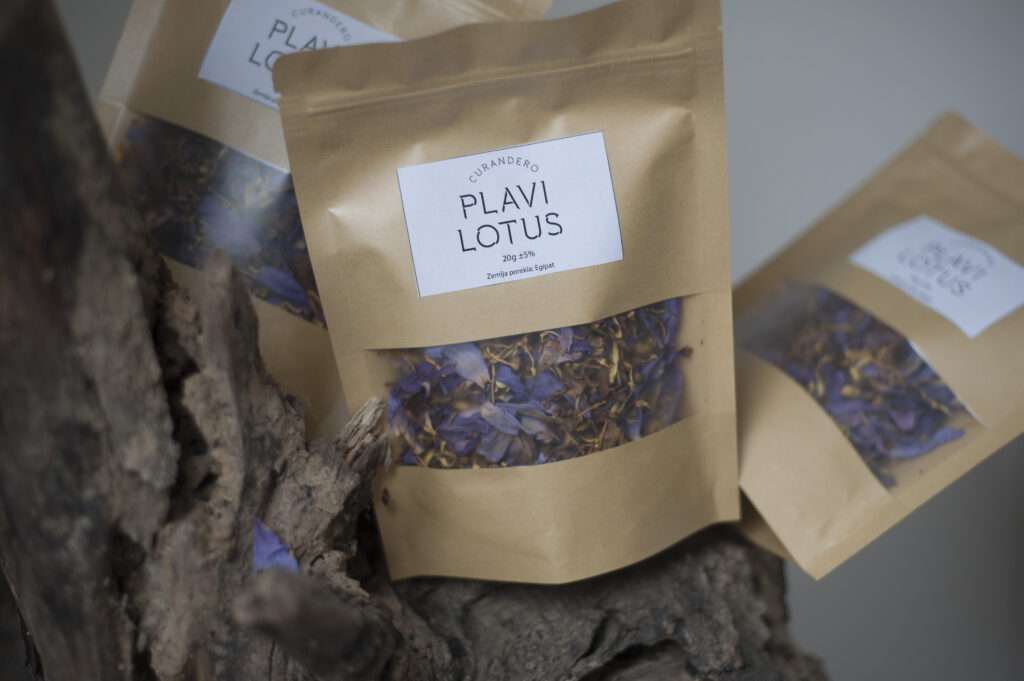
One of the most famous legends about blue lotus tea in Egypt is the story of the sun god Ra and his journey through the underworld. According to the legend, Ra was growing old and weak, and his enemies were plotting against him. In order to regain his strength and defeat his enemies, Ra had to travel through the underworld and face many challenges.
Ra came across a beautiful plavi lotus flower growing in a pond during his journey. He picked the flower and brewed it into a tea, which he drank to gain renewed energy and vitality. The tea had a calming effect on him, and he was able to continue his journey through the underworld without fear.
Kada je Ra izašao kao pobednik iz podzemnog sveta, poklonio je cvet plavog lotosa narodu Egipta. Počeli su da pripremaju čaj od ovog cveta, koji je ubrzo postao popularno piće širom zemlje. Verovalo se da čaj ima magična svojstva, da donosi sreću, povećava plodnost i podstiče osećaj opuštenosti i unutrašnjeg mira.
Vremenom je čaj od plavog lotosa postao simbol moći i mudrosti boga sunca Ra i bio je poštovan kao sveto piće u starom Egiptu. Čak i danas, u čaju od plavog lotosa se uživa u Egiptu i drugim delovima sveta, i dalje je povezan sa mističnim i duhovnim tradicijama starih Egipćana.
The blue lotus flower, also known as Nymphaea caerulea, has been revered for centuries for its beauty and spiritual significance. This aquatic plant is native to the Nile River and other parts of East Africa and has played an important role in the cultural and religious practices of ancient Egyptian and Hindu societies.
In ancient Egypt, the blue lotus was considered a symbol of creation and rebirth and was often depicted in artwork and mythology. The plant was also believed to have medicinal properties and was used to treat a variety of ailments, such as anxiety, insomnia, and gastrointestinal issues. The blue lotus was also used in religious ceremonies and was thought to be a gateway to the spiritual realm. According to some accounts, blue lotus was even used as a recreational drug, with its psychoactive effects causing feelings of euphoria and relaxation.
In Hinduism, the blue lotus is associated with the god Vishnu, who is often depicted holding a lotus flower. The plant is also associated with the goddess Saraswati, who is said to have emerged from a lotus flower. In Hindu mythology, the lotus represents purity, enlightenment, and spiritual growth.
The use of blue lotus in religious and cultural practices has continued into modern times. In some parts of Africa, traditional medicine still uses plants to treat various ailments. In addition, the psychoactive effects of the plant have led to its use as a recreational drug in some cultures.
Today, the blue lotus is also popular as an ornamental plant in water gardens and ponds. It’s delicate blue flowers and lush green foliage add a touch of beauty and serenity to any outdoor space.
Despite its long history and enduring significance, the blue lotus remains a mysterious and elusive plant, with much still to be learned about its medicinal and spiritual properties. Nevertheless, its beauty and cultural significance have ensured that it will continue to be admired and valued for generations to come.
Blue lotus tea is a beverage made from the dried petals and stamens of the blue lotus flower (Nymphaea caerulea). It has been used for centuries in traditional medicine and spiritual practices in various cultures, especially in Egypt and India. While the scientific research on blue lotus tea is limited, it is believed to have several potential health properties, including:
- Relaxation: Blue lotus tea has natural sedative effects that may help promote relaxation and reduce stress and anxiety.
- Pain relief: The alkaloids and flavonoids present in blue lotus tea have analgesic properties that may help relieve pain and inflammation.
- Mood enhancement: Blue lotus tea has been traditionally used as an aphrodisiac and mood enhancer, and it may help improve mood and overall well-being.
- Sleep aid: Blue lotus tea’s relaxing properties may also help improve sleep quality and reduce insomnia.
- Digestive aid: Blue lotus tea may help soothe digestive issues such as indigestion, bloating, and diarrhea.
- Respiratory aid: Blue lotus tea may help relieve respiratory issues such as cough, bronchitis, and asthma.
- Nervous system support: Blue lotus tea may have neuroprotective effects and help support the nervous system.
It’s important to note that blue lotus tea may have some potential side effects and interactions with certain medications, and it is not recommended for pregnant or breastfeeding women. If you’re considering using blue lotus tea for its health properties, it’s best to consult with a healthcare professional first.
Da, čaj od plavog lotosa se generalno smatra bezbednim kada se konzumira u umerenim količinama, ali postoje neki mogući neželjeni efekti i interakcije na koje treba obratiti pažnju. Evo nekoliko stvari koje treba imati na umu:
- Sedativni efekti: Čaj od plavog lotosa poznat je po umirujućem i sedativnom dejstvu, koje može izazvati osećaj opuštenosti i pospanosti. Iako ovo može biti korisno za neke osobe, takođe može izazvati pospanost ili smanjiti sposobnost vožnje ili rukovanja teškom mašinerijom. Najbolje je izbegavati konzumaciju čaja od plavog lotosa pre vožnje ili obavljanja zadataka koji zahtevaju koncentraciju.
- Alergijske reakcije: Neke osobe mogu biti alergične na plavi lotos, što može izazvati iritaciju kože, svrab i druge alergijske reakcije. Ako primetite bilo koji od ovih simptoma, prestanite sa konzumacijom čaja od plavog lotosa i potražite medicinsku pomoć.
- Interakcije sa lekovima: Čaj od plavog lotosa može stupiti u interakciju sa određenim lekovima, uključujući sedative, antidepresive i lekove protiv anksioznosti. Važno je da se posavetujete sa lekarom ili farmaceutom pre nego što konzumirate čaj od plavog lotosa ako uzimate bilo koje lekove.
- Pregnancy and breastfeeding: There isn’t enough information available to determine the safety of blue lotus tea during pregnancy and breastfeeding. It’s best to avoid consuming blue lotus tea if you’re pregnant or breastfeeding.
- Oštećenje jetre: Čaj od plavog lotosa može izazvati oštećenje jetre ako se konzumira u velikim količinama tokom dužeg vremenskog perioda. Važno je konzumirati čaj od plavog lotosa umereno i pridržavati se preporučenih uputstava za doziranje.
Važno je napomenuti da čaj od plavog lotosa može imati moguće neželjene efekte i interakcije sa određenim lekovima, te se ne preporučuje trudnicama i dojiljama. Ako razmišljate o upotrebi čaja od plavog lotosa zbog njegovih zdravstvenih svojstava, najbolje je prvo se posavetovati sa zdravstvenim stručnjakom.